

Physis Capital AIF Fund
Physis Capital is a Category II AIF in India focused on growth-stage startup investments, targeting high-potential companies across sectors. Designed for HNIs, the fund focuses on structured portfolio allocation and long-term value creation.
For investors exploring an AIF fund India allocation, the deck positions the fund from Pre-Series A to Series B with a target portfolio of ~15–18 companies and a stated 9-year tenure. Because AIFs can be higher-risk and illiquid, this is typically evaluated as a HNI investment fund style allocation (subject to the official offer documents and suitability).
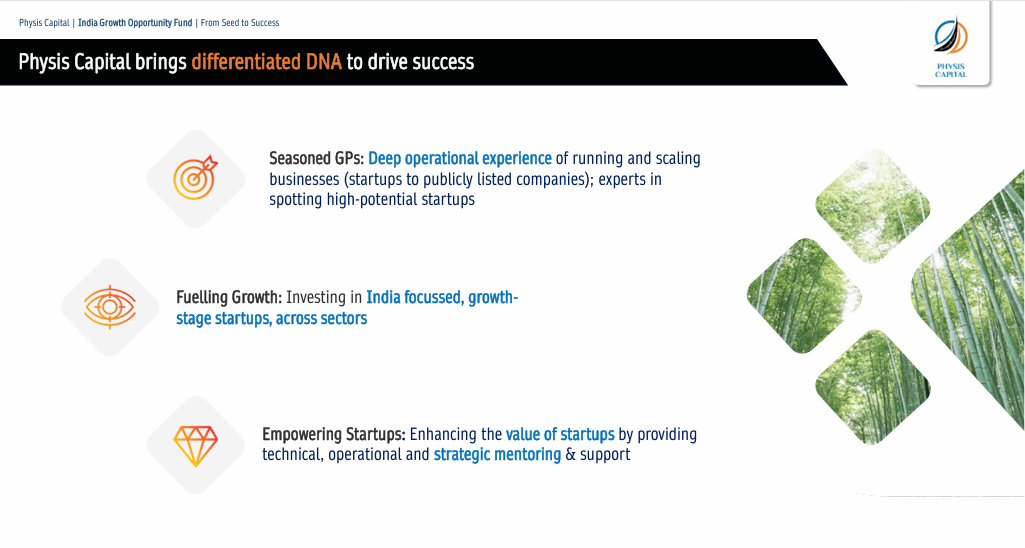
Why Physis Capital
- Experienced fund managers with deep operational background.
- Focus on India-centric growth-stage startups across sectors.
- Active support through strategy, operations, and mentorship.
The deck emphasizes scale of sourcing and decision support: experience evaluating 25,000+ startups over five years, partner-led due diligence supported by industry SMEs, and access to large networks (including CXOs and follow-on capital relationships) to help companies raise, scale and eventually exit.
If you’re evaluating a Physis Capital AIF allocation as part of your alternative sleeve, this section highlights the “operator-led” positioning and the intent to work closely with portfolio companies beyond just capital.
Fund Strategy
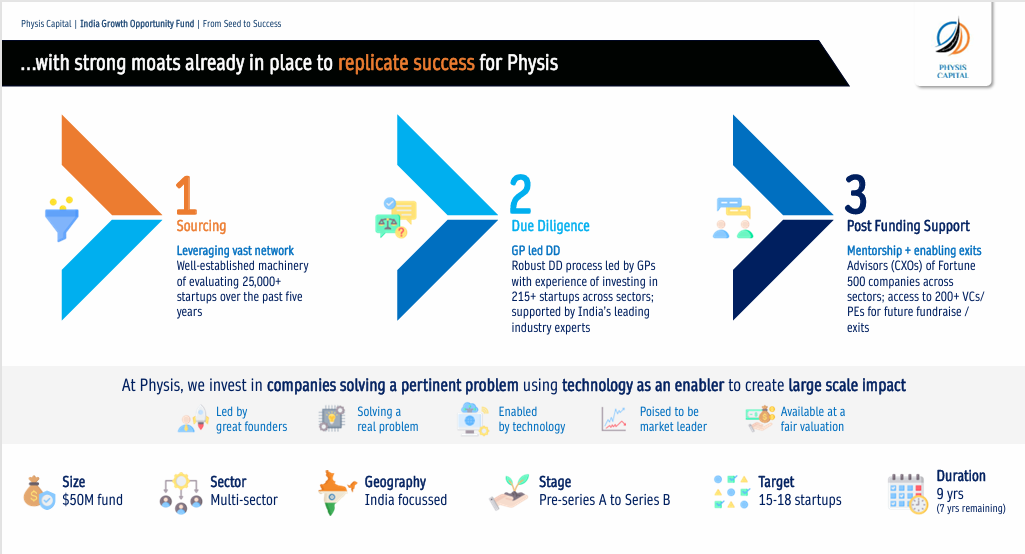
The fund focuses on multi-sector opportunities in India, investing in Pre-Series A to Series B startups with a target portfolio of 15–18 companies.
- Fund Size: $50 Million (INR 400 Cr shown in deck)
- Geography: India-focused
- Stage: Growth-stage startups (Pre-Series A to Series B)
- Target portfolio: ~15–18 companies across sectors
For many investors, this kind of AIF fund India exposure fits as a higher-risk, long-horizon allocation typically considered by HNIs and family offices.
In a diversified portfolio, early/growth-stage exposure is commonly treated as a “satellite” allocation alongside core listed holdings. Investors should review the fund’s terms, fees, liquidity profile and risk disclosures before committing capital.
Investment Process
The deck breaks the process into three steps—sourcing, due diligence, and post-investment support—designed to improve selection quality and help portfolio companies scale.
This is important for private-market investing where outcomes can be driven by (a) entry discipline, (b) ongoing execution support, and (c) the ability to access follow-on capital. The fund’s stated process is built to systematize these three areas.
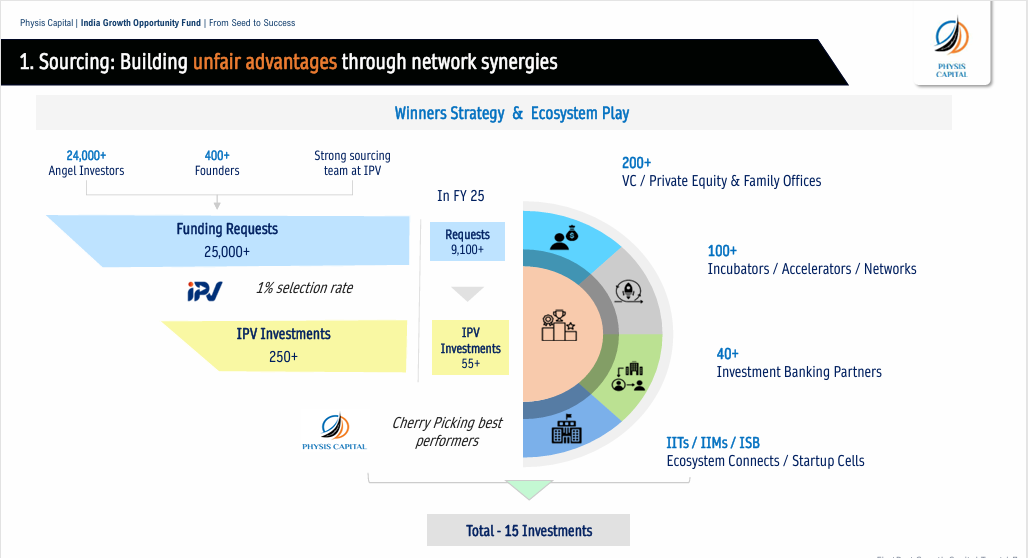
Sourcing
Access to a large network of startups and investors to generate deal flow.
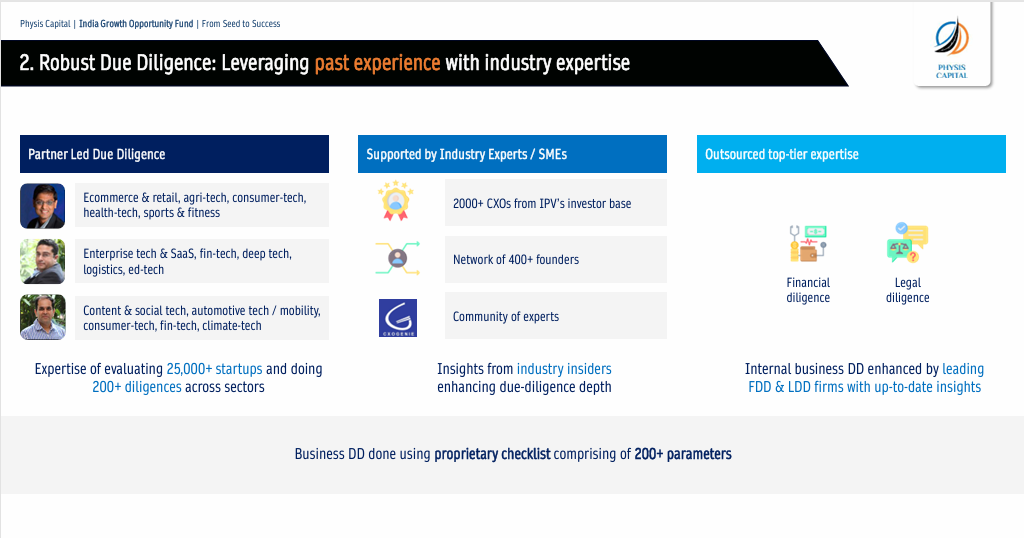
Due Diligence
Structured evaluation backed by industry experts, financial diligence and legal diligence.
Post Investment
Active support to help founders execute growth plans and prepare for follow-on rounds or exits.
Value Creation
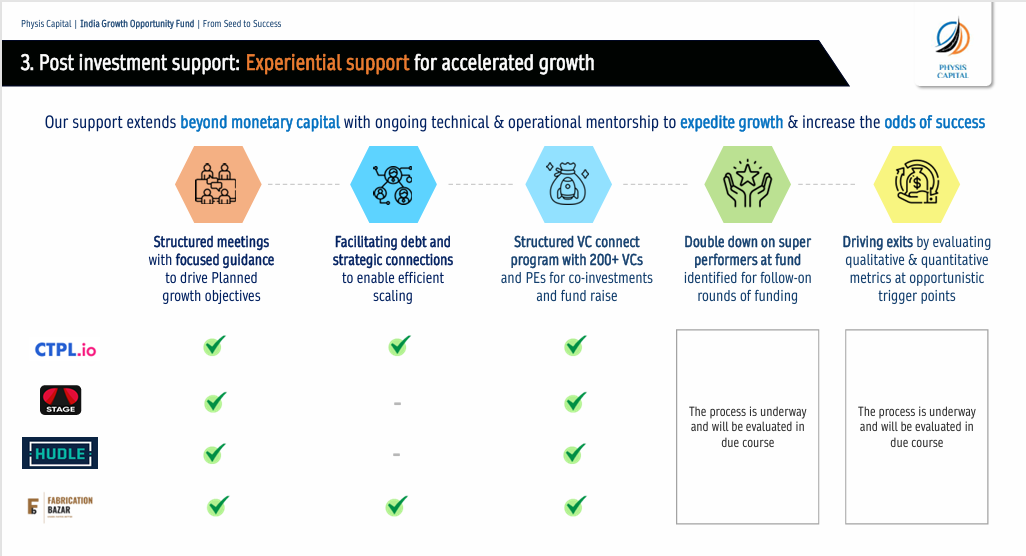
The fund provides more than capital, including mentorship, strategic partnerships, and exit planning support. The deck references structured meetings, VC/PE connects and a process to evaluate exits at opportunistic trigger points.
Portfolio Companies
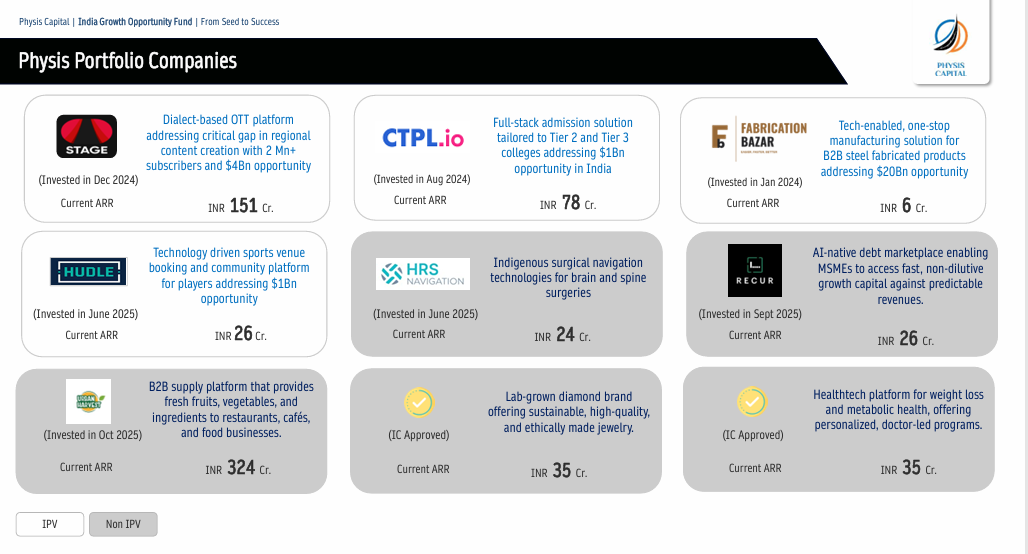
The fund has invested in multiple high-growth companies across sectors including technology, healthcare, and consumer platforms. Portfolio composition can change over time as new investments are added and companies mature.
For investors, portfolio breadth matters because private market outcomes are often “power law” driven—meaning a few winners may drive a large share of returns. Understanding how the manager sources, sizes, and supports investments is as important as the sector labels on the slide.
Risks to consider
AIFs investing in early/growth-stage private companies can carry higher risk and lower liquidity than listed instruments. This summary is not a substitute for the official documents—review disclosures carefully before making any commitment.
- Illiquidity risk: capital may be locked for long periods; exits can be uncertain.
- Startup risk: business models may fail or take longer to scale than expected.
- Valuation risk: private valuations can change materially between rounds.
- Concentration risk: with a limited number of investments, outcomes may be driven by a few positions.
- Execution risk: results depend on consistent sourcing, diligence, and active portfolio support.
Fund Details
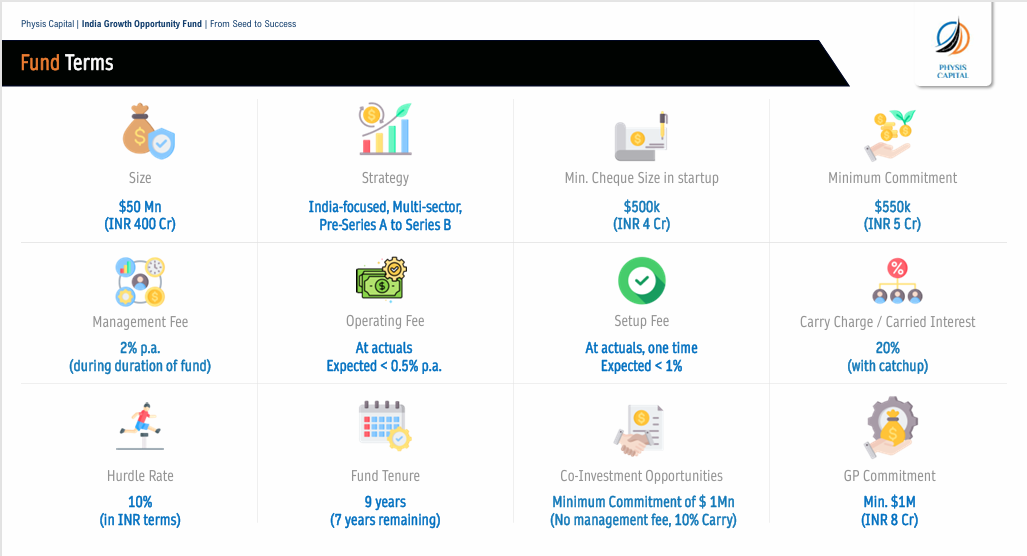
- Minimum Investment: ₹8 Cr (approx) (Min. $1M shown in deck)
- Fund Size: ₹400 Cr (approx) ($50 Mn shown in deck)
- Tenure: 9 years (7 years remaining shown in deck)
If you’d like to compare multiple funds side-by-side, start with our AIF fund list and then read the broader education pages on AIF fund types and AIF taxation.
Want help comparing this with other alternatives? Browse our Alternative Investment Funds list or speak with our team.
Category II AIF in India – Overview
Category II AIFs in India are widely used for private equity, venture capital and structured investment strategies, typically requiring a minimum investment of ₹1 crore.
Physis Capital is a Category II AIF in India focused on growth-stage startup investments, aligning with long-term innovation and high-growth opportunities.
FAQ
Physis Capital is a Category II AIF in India focused on growth-stage startup investments.
Category II AIFs in India are alternative investment funds that invest in private equity, venture capital and structured credit opportunities, typically requiring a minimum investment of ₹1 crore.