
BlackSwan Perspective
AIF vs PMS – Which Investment is Better for HNI Investors in India?
A detailed comparison of AIF vs PMS covering investment structure, minimum investment, liquidity, taxation and risk to help high-net-worth investors choose the right strategy.
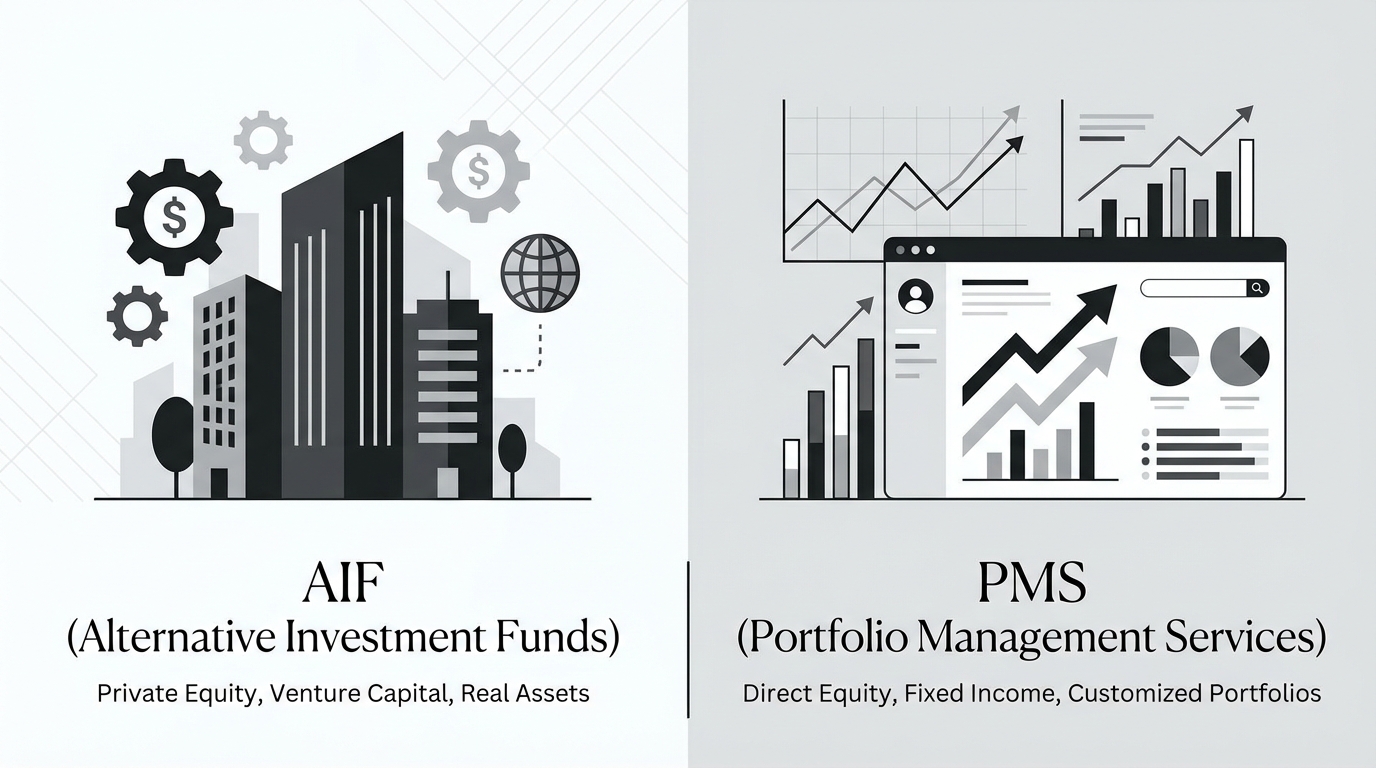
High-net-worth investors in India often face an important question — should they invest in Alternative Investment Funds (AIF) or Portfolio Management Services (PMS)?
Both of these investment structures are designed for sophisticated investors looking for opportunities beyond traditional mutual funds. However, they differ in terms of structure, liquidity, transparency, taxation and risk.
At BlackSwan Securities, we regularly analyse both PMS and AIF strategies to help investors understand which structure aligns better with their financial goals. This guide explains the key differences between AIF and PMS.
What is Portfolio Management Services (PMS)?
Portfolio Management Services (PMS) is a professional investment service where a portfolio manager manages a customized portfolio of securities on behalf of an investor.
The securities are held directly in the investor’s demat account, providing full transparency and ownership.
Key features of PMS include:
- Minimum investment of ₹50 Lakhs
- Direct ownership of stocks
- Customized portfolio strategies
- Professional portfolio management
- Transparent reporting
PMS is generally suitable for investors seeking actively managed equity portfolios with a long-term investment horizon.
What is Alternative Investment Fund (AIF)?
Alternative Investment Funds (AIF) are pooled investment vehicles where capital from multiple investors is combined and invested according to a defined strategy.
AIFs typically invest in opportunities outside traditional equity and debt markets, such as:
- Private equity
- Venture capital
- Structured credit
- Hedge fund strategies
- Pre-IPO investments
Most AIFs require a minimum investment of ₹1 Crore and are designed for experienced investors who understand alternative asset classes.
AIFs are divided into three main categories:
Category I – Funds investing in startups, SMEs and infrastructure
Category II – Private equity and debt funds
Category III – Hedge fund strategies and trading strategies
AIF vs PMS – Key Differences
Investment Structure
In PMS, investments are made directly in the investor’s name. The portfolio manager executes transactions in the client’s demat account.
In AIF, funds from multiple investors are pooled together and managed collectively by the fund manager.
Minimum Investment
PMS typically requires a minimum investment of ₹50 Lakhs.
AIF usually requires a minimum investment of ₹1 Crore.
This makes PMS relatively more accessible compared to AIF structures.
Liquidity
Liquidity is an important factor for many investors.
PMS portfolios usually invest in listed equities, which allows relatively higher liquidity.
Many AIFs have lock-in periods, particularly Category I and Category II funds, where investors may not be able to exit for several years.
Risk Profile
PMS portfolios are generally linked to stock market performance since they primarily invest in listed equities.
AIF risk depends heavily on the strategy used. Some AIFs invest in early-stage companies or structured credit opportunities, which may involve higher risk but also potentially higher returns.
Understanding the underlying investment strategy is critical before investing.
Taxation
PMS taxation follows capital gains rules applicable to direct equity investments.
Short-term and long-term capital gains taxes apply depending on the holding period.
AIF taxation varies by category:
Category I and Category II AIFs generally follow pass-through taxation.
Category III AIFs may be taxed at the fund level depending on the structure.
Investors should always evaluate tax implications before investing.
Transparency
PMS investors can see the exact stocks held in their portfolio because the securities are owned directly in their demat account.
AIF investors receive periodic reports about fund performance, but the visibility of underlying assets may be more limited.
Which is Better – AIF or PMS?
There is no single answer to this question. The right choice depends on factors such as:
- Investment amount
- Risk tolerance
- Liquidity needs
- Investment horizon
- Portfolio diversification goals
PMS may be suitable for investors seeking direct equity exposure and higher transparency.
AIF may be suitable for investors seeking access to alternative strategies beyond listed markets.
Expert Perspective
Based on our research experience at BlackSwan Securities, many sophisticated investors allocate capital across both PMS and AIF.
For example, PMS strategies may form the core equity allocation, while AIF investments provide exposure to alternative opportunities such as private equity or structured credit.
This blended approach can help improve diversification and risk management.
Final Thoughts
Both PMS and AIF offer unique advantages for high-net-worth investors.
PMS provides transparency and flexibility through direct ownership of investments, while AIF offers access to alternative strategies and private market opportunities.
Before making an investment decision, investors should carefully evaluate which structure aligns best with their financial goals and risk profile.
FAQs
What is the minimum investment in PMS?
PMS requires a minimum investment of ₹50 Lakhs.
What is the minimum investment in AIF?
Most AIFs require a minimum investment of ₹1 Crore.
Can investors invest in both AIF and PMS?
Yes. Many investors allocate funds to both structures to diversify their portfolios.
Which investment offers better liquidity?
PMS generally offers better liquidity compared to many AIF structures.
Keep exploring
Want to explore curated AIF opportunities? Connect with our team.